I just got off the back of a long weekend re-watching the Google I/O 2026 keynote and the developer sessions, and the headline is unambiguous: Google is all-in on agentic AI. Gemini 3.5, Antigravity 2.0, Managed Agents in the Gemini API, Android Studio's migration agent, AI Studio's native Kotlin support, WebMCP for browsers. Almost every announcement assumes you are building with agents, not just chat features.
Below is the developer's-eye recap, what shipped, what it actually means, and what should move on your roadmap this quarter.
1. Gemini 3.5 Flash: frontier intelligence with action
The headline model is Gemini 3.5 Flash, Google's first in the 3.5 series. Google's claim is that it outperforms Gemini 3.1 Pro across "almost all benchmarks" while running 4× faster than the previous frontier-tier model. The reported numbers (Terminal-Bench 2.1 at 76.2%, GDPval-AA at 1656 Elo, MCP Atlas at 83.6%) put it in the same conversation as Claude Opus 4.7 and GPT-5 on agentic / coding workloads.
The unstated takeaway: speed is now a top-tier benchmark. As coding agents and multi-step workflows become the default, throughput matters as much as raw IQ. Latency-sensitive use cases that previously needed a smaller model can now use frontier-tier intelligence.
2. Antigravity 2.0: the agent-first dev platform grows up
Antigravity has moved from "interesting beta" to a real competitor in the agentic coding space. The big upgrades:
- Antigravity desktop app, a dedicated environment for orchestrating multiple agents in parallel.
- Antigravity CLI, terminal-first, sandboxed, with hardened Git policies and credential masking.
- Dynamic subagents, spin up specialised agents for sub-tasks (research, refactor, test).
- Scheduled tasks, long-running background work; results land in your inbox.
- Antigravity SDK, programmatic control of the agent harness. You can deploy on your own infra.
- Integrations, AI Studio, Android, Firebase.
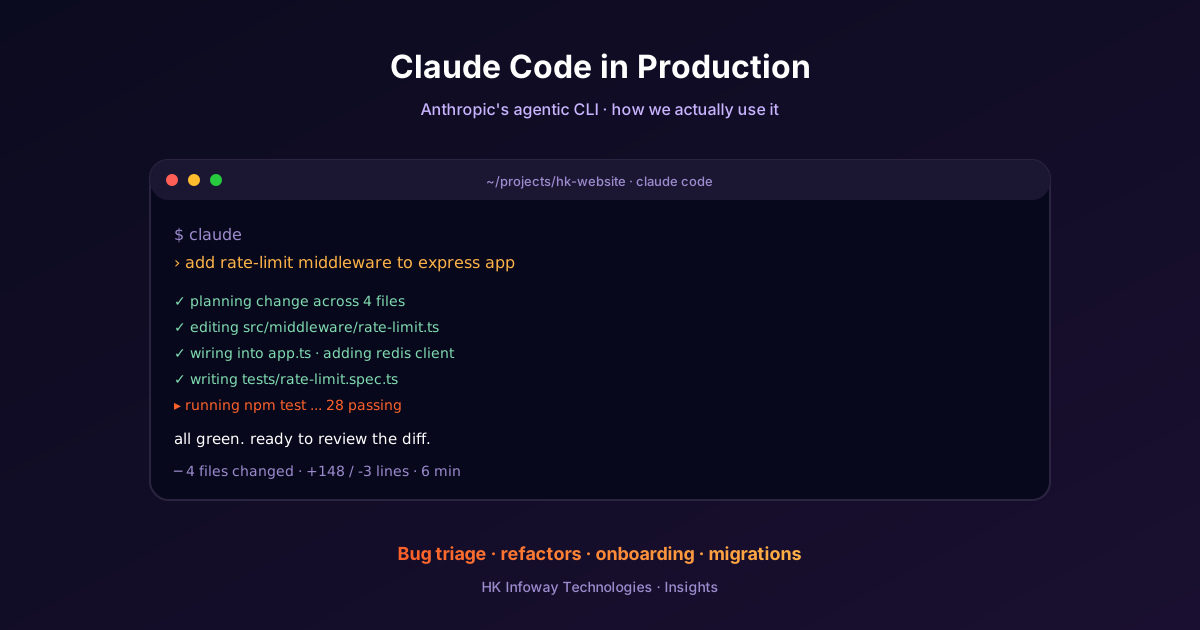
If you live in Google Cloud, this is the moment to seriously evaluate Antigravity alongside Claude Code and Cursor.
3. Managed Agents in the Gemini API
This is the most important shipped-this-week feature for production teams. With a single API call, you get a fully provisioned agent in an isolated Linux sandbox, same harness as Antigravity, exposed via the Interactions API and AI Studio.
Before today, hosting an agent meant babysitting containers, secrets, networking, retries. Managed Agents removes that surface area. For SaaS teams that want agent-style features without becoming infra companies, this is a real unlock.
4. Android development: the agent becomes your pair programmer
The Android announcements are the most opinionated of the conference:
- Android CLI (stable). AI agents can now drive Android Studio, manage SDKs, run tests, profile, through a clean CLI.
- Android Skills (open source). LLM-ready skill packs for common Android tasks: Jetpack Compose migration, Navigation 3 migration, etc.
- Android Bench. A public leaderboard for AI models on Android tasks. Useful when picking which model to wire into your dev workflow.
- Migration Agent. Auto-migrates apps from React Native, web, or iOS to native Kotlin. Google's claim: "weeks → hours." We will be benchmarking this against client codebases over the coming month.
5. AI Studio + Kotlin: building Android apps without leaving the browser
AI Studio now has native Kotlin support and "vibe-coding" of Android apps directly inside it, one-click deploy to Cloud Run, integrations with Firebase, and seamless export to Antigravity when you outgrow the browser. For prototyping, this is genuinely impressive. For production, expect to graduate into Antigravity quickly.
6. WebMCP: the agentic web standard arrives in Chrome
This is the announcement most people will under-rate. WebMCP is a proposed open web standard that lets pages expose tools (JS functions, HTML forms) to browser-resident AI agents. Chrome 149 ships the origin trial; native Gemini support is on the way.
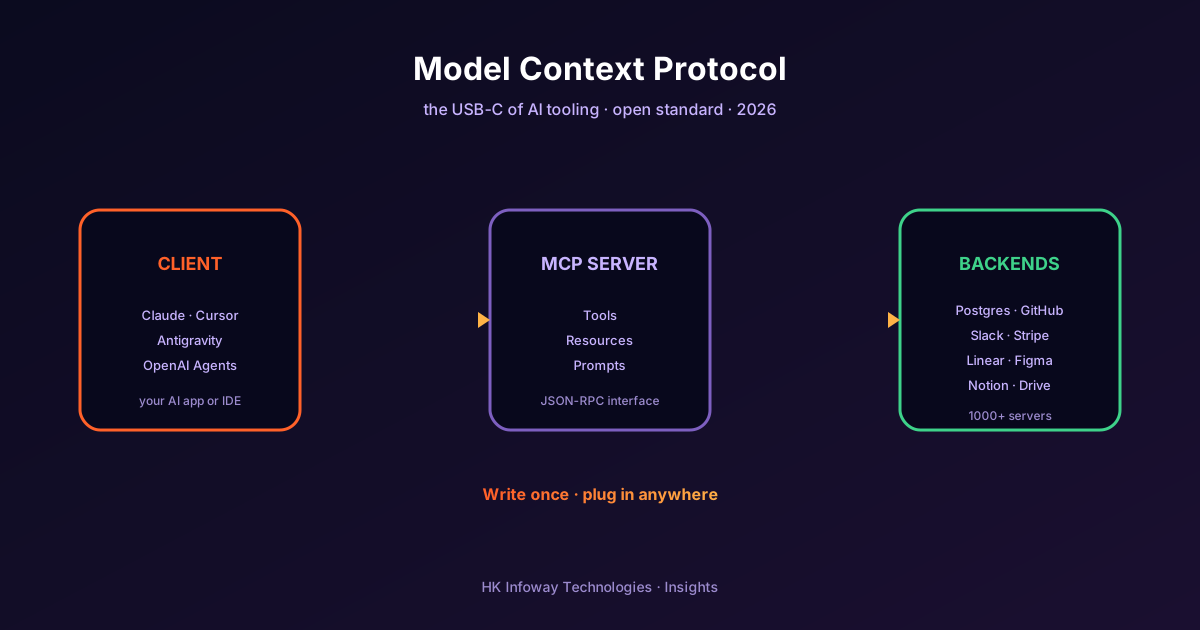
If you read our piece on MCP becoming the USB-C of AI tooling, WebMCP is its browser sibling. It is a big deal: every site can now have a structured, agent-accessible interface without bespoke integrations.
7. Chrome DevTools for agents
Chrome DevTools now has agent-oriented capabilities, automated quality audits, real-world UX emulation, session handover with auto-connect. Less glamorous than Gemini Omni but quietly important for anyone running Core Web Vitals work at scale.
8. The new pricing layer: AI Ultra at $100/month
Google launched a new AI Ultra tier at $100/month, with 5× higher Antigravity usage than the AI Pro plan and access to frontier features. For agentic-heavy engineers it is reasonable; for casual users, Pro is still the right call.
The strategic read
Three things stood out, in order of importance:
- Google has caught up, and on price/performance, perhaps overtaken, on coding agents. Antigravity 2.0 plus Gemini 3.5 Flash is a credible challenger to Claude Code and Cursor.
- Managed Agents is the most actionable announcement. If you ship product, this lets you add agentic features without owning the infrastructure.
- WebMCP is the long bet. If it catches, the entire web becomes an agent surface within 18 months.
What we are doing this week
- Evaluating Antigravity 2.0 on three real client repos and benchmarking against our current Claude Code workflows.
- Spinning up a Managed Agent prototype for an ATS feature, drafting candidate emails with safe tool access.
- Watching the WebMCP origin trial closely and planning a Chrome 149 experiment for one of our SaaS clients.
The honest bottom line
Google I/O 2026 was less about a single hero feature and more about a worldview: agents are the new application primitive. If you build software, your roadmap should now have an "agent surface" line item, the same way it has an "API" line and a "mobile" line.
Want a team that is already shipping in this world? See how we build AI-native products, read about shipping AI features into SaaS, or talk to us.
Sources: Google's official I/O 2026 announcements, Google Developers blog, Gemini 3.5 announcement.